How I Help MSPs Increase Qualified Leads By Over 900%
Here’s a story that many managed IT support owners can relate to: your content marketing strategy is in place, it’s driving traffic, but you only get low-quality leads that don’t convert.
Let’s be honest, when it comes to content writing, most MSPs can offer insightful content. You’re not short on expertise and valuable information. You can describe technical issues and provide solutions.
And that’s all well and good.
The problem is, you’re not getting enough eyes on your content by the people that matter – the decision-makers who press the buy button.
Ultimately, you’re short on visibility.

Do you need to improve your online visibility?
When your content doesn’t land on the screen of your ideal audience, you don’t get as many leads.
Poor online visibility means your website never gets discovered — neither do your services.
When traffic is low, opportunities are limited, and revenue is unpredictable.
What’s more, the hits on your website are low-quality leads that go nowhere.
The short and curly of all this is that you’re spending time, money and effort on a content marketing strategy that is not aligned with buyer intent.
This creates a frustrating feast and famine cycle:
-
- You rely on referrals because your website isn’t performing
-
- Your messaging doesn’t stand out in the social media noise
-
- Leads are looking for free consultations without wanting to commit
-
- Low conversion rates are causing unnecessary stress
- You’re throwing money into an online void
Sound familiar?
The real issue is not getting more traffic — it’s getting the right traffic!
In today’s market, if you’re not visible, you’re irrelevant.
At some point, growth plateaus.
Leads become inconsistent.
Revenue becomes unpredictable.
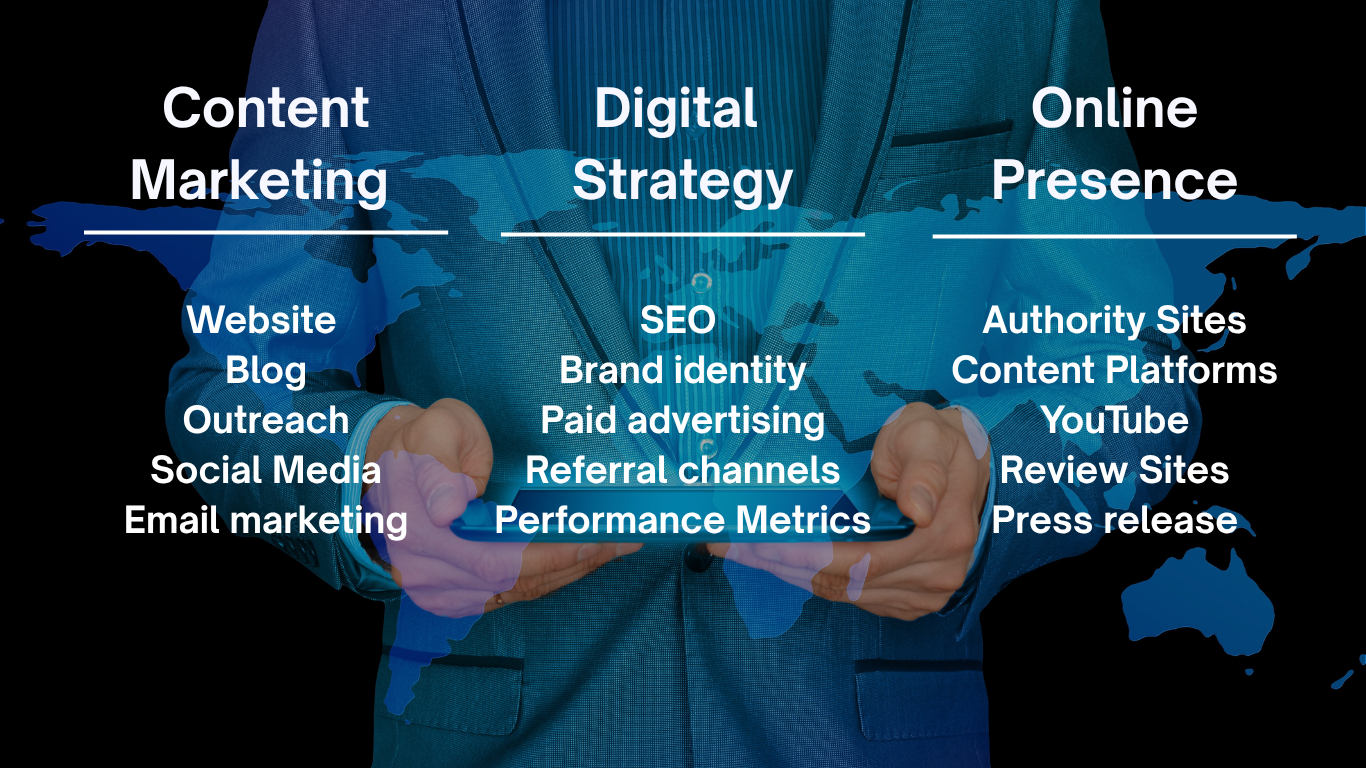
This is why content marketing needs a digital strategy.
What are the best content marketing practices?
A good content marketing strategy is not simply designed to increase traffic and conversions through your website — it directs people to your website.
Let’s get this straight. Search engines are a super-powerful platform that delivers prospects with buyer intent right to your doorstep.
But only if you’re ranking in the top spots.
Which is achievable, of course!
It can take a while to get to page #1 in Google, but once you do, you will see the quality of the leads arriving at your website increase exponentially.
Issues also occur when there is nobody to meet and greet visitors. I’m not suggesting you install an AI robot. They can be annoying, but at the very least, there should be:
-
- Images of you, your team and your place of work
-
- A video on the homepage introducing yourself
Otherwise, you’re a faceless business. If you also have a dull brand personality, visitors are not going to stick around.
Your high-quality leads just left the building.
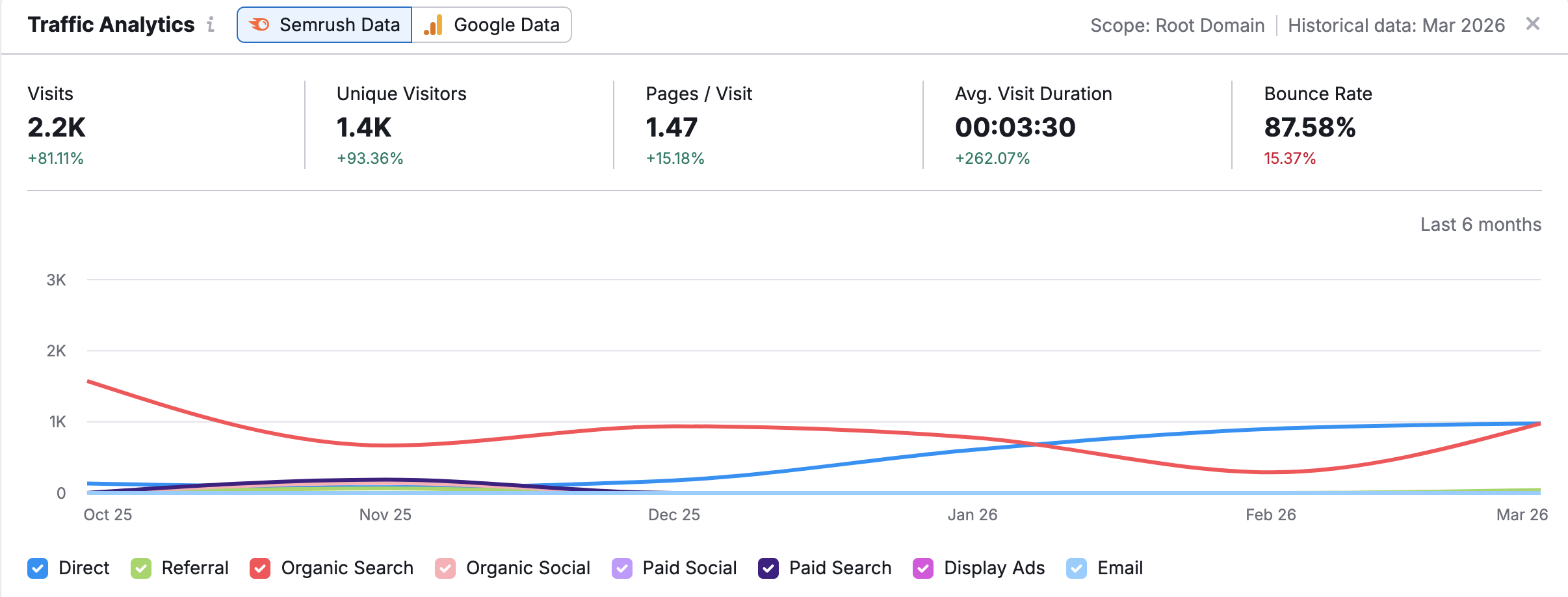
When I’ve worked with MSPs in the past, I was able to increase website traffic by over 80% over a six-month period.
The screenshot below shows an increase in organic traffic of 197.63% from multiple sources. The most significant metric is the Direct traffic on the second screenshot. This indicates the number of returning visitors – leads who are most likely to convert.

How to create a content marketing strategy
Creating a content marketing plan starts with clarity on your audience.
The objective is to reach out to your preferred ideal client — what we call your PIC — and tell them what they need to know.
Who is your PIC?
What problems do they encounter?
What pain points do their problems cause?
Because you know your PIC, you know how to communicate with them.
Here’s a handy hint: Your PIC is somebody like you, somebody you enjoy working with and working for.
Your PIC is your partner.
Once you’re talking to your PIC, you need to guide them along the attention to acquisition highway — otherwise known as a client pathway, or more traditionally, a marketing funnel.
Content captures attention.
Trust compels conversions.
You build trust through content by establishing yourself as an authority in your field.
No problem for you there, because you’re an authority in your field.
But so are your competitors.
So you have to stand out in the crowd.
That’s why we designed the Red Dress Blueprint. (In the Matrix, the girl in the red dress captures the attention of Neo)
Go get your Neo!

1. On-Page SEO: Effective SEO Techniques
What follows is exactly how it works.
To attract traffic with buyer intent, your website has to be primed with keywords for what visitors intend to buy.
I will spare you the explanation of how search engines work, but the lack of targeted keywords where most small business websites fall down — at the first hurdle.
Your website may look great, function well and offer a fantastic user experience. But if Google’s algorithm can’t understand your site, the search engines will not match your webpage against a search term.
And it’s goodbye, Neo.
What are the most typical SEO problems on small business websites?
-
- Pages aren’t optimised for search intent
-
- Keywords are either missing or misused
-
- Targeting is too broad or irrelevant
-
- Messaging is vague and stilted
-
- Internal links are weak or non-existent
-
- Images are generic
-
- Title tags and meta descriptions are missing or poorly written
-
- Lack of structured headings (H1, H2, H3, etc.)
-
- Keywords in the wrong positions
-
- No depth or authority (which means lack of trust)
To improve your onsite SEO, determine which keywords align with buyer intent for each page.
Refine your core pages to ensure they reflect how people actually search for IT services.
That means:
Structuring content around high-intent keywords
Making your services explicitly clear
Strengthen internal linking between pages
Rewrite messaging so it speaks to real business pain points
When your website clearly communicates:
-
- What you do
-
- Who you do it for
-
- And what your prospects can expect
…both Google and your prospects pay take notice.
What outcome can you expect from an SEO-focused content marketing strategy?
-
- Higher rankings for service-related searches
-
- More relevant traffic landing on key pages
-
- Improved conversion rates
This is the groundwork.
Everything else builds on top of it.

2. SEO Blog Content: Build A Traffic Engine That Compounds
Now we move to the engine.
Blog content is where the majority of traffic growth happens — if it’s done properly.
Most MSP blogs fail because:
-
- the topic choice is too generic
-
- the advice is surface-level
-
- the content is regurgitated by AI content creation machines
All this adds up to bland content nobody wants to read.
It lacks character.
It’s boring.
It fails to engage.
A content marketing strategy does not work if you are publishing content simply for the sake of filling out your blog.
Where is the content strategy?
The solution is to publish content that is geared towards providing information your PIC want to know about. Content that has buyer intent in mind.
Examples of SEO blog content:
-
- Provide high-level content which outlines risk v cost so that IT managers can present bullet points that boardroom executives will understand
Why does this content matter?
Because IT decisions often involve directors, finance, and operations. Consensus takes time. Deals stall or break down while internal stakeholders “review options.”
-
- Educate prospects on why proactive services matter and why reactive IT is a risk they cannot afford.
Why does this content matter?
Most prospects don’t start by searching for an MSP. They start by searching for a solution to fix their problem.
If you’re not visible in problem-awareness searches, you’re missing out on opportunities to attract leads with buyer intent.
Position your MSP as the first source of insight.
-
- Provide cybersecurity alerts by showing your clients how to identify the latest hacking strategies
Why does this content matter?
Cybersecurity is a concern for companies of all sizes, and many small business owners don’t really understand it.
Helping to alleviate cybersecurity stressors by providing calming and informative content helps you to build trust with readers. They will also keep coming back for the latest updates — and may even sign up for your newsletter.
-
- Improve trust by lowering the barriers business owners worry about, e.g., data protection, the reliability of your service, and strategic expertise.
Why does this content matter?
Prospects evaluate their options. IT managers and business executives are not merely looking for information — they’re looking for direction.
Content that focuses on the typical concerns decision-makers have helps your PIC to overcome confusion and change their perspective on outsourcing IT.
-
- Describe the tools you use, the outcomes and the benefits
Why does this content matter?
MSPs tend to provide the same services and tools, with slight exceptions. The exception may be a selling point.
But the real purpose behind this type of content is to inform executives what outcomes they can expect from your service.
Buyers always want to know what the benefit of a service is, not just what it does.
Describing how your tools work also helps you to manage unrealistic expectations. As you are aware, it’s not uncommon for business owners to want enterprise-level services on an entry-level budget.
When you have a library of authoritative content on your blog, business owners trust you more than competitors.

3. Content Marketing Strategy: From Awareness To Acquisition
A content marketing strategy encompasses a variety of platforms and media to meet your PICs where they are.
Content marketing is central to a digital strategy.
Every piece of content is designed to target a specific stage of the buyer journey.
Your PICs will sit in one of three stages:
-
- Awareness
-
- Consideration
-
- Decision
When creating content, your objective is to guide your PIC from awareness to Decision. Your acquisition.
The awareness-to-action path takes your prospects from saying:
“Something’s gone wrong, I need a solution”
To
“We need a qualified MSP to do this for us — and we’re choosing you!”
The journey may not be a straight line, but it always starts with awareness and, you hope, will end in acquisition.
To be the chosen one, Neo must follow the white rabbit.
That’s you, Bunny!
At each stage, your prospect is asking different questions, thinking differently, and looking for different types of content.
If your content doesn’t meet them where they are, they won’t move forward.
Bunny, Neo must learn to trust you.
You must earn Neo’s trust!
Here’s how!
What are the Three Stages of a Buyer’s Journey?
Stage 1: Awareness — “I Need Answers”

The first stage of your relationship with a prospect is when your PIC first notices you.
Saucy.
With a content marketing strategy, this can happen in several ways:
-
- They find one of your posts whilst scrolling through social media
-
- They encounter a problem with their IT system and find a useful article on your blog
-
- They are drawn to a headline in an article you have published off-site, i.e. Medium, Substack,
-
- They come across an answer you posted on Reddit
-
- They hear about you on the grapevine
-
- You meet them at a networking event or trade show
At the awareness stage, your PIC is unlikely to be looking to partner with an MSP.
They’re looking for answers.
But now you have their attention!
To retain their attention, you need to engage them.
Which requires publishing content that offers value by being informative, to the point and easy to read. Long-winded paragraphs and a boring brand personality is not engaging.
What type of content should MSPs publish to capture attention/awareness?
-
- Why does your IT system keep failing?”
-
- If your business is experiencing IT downtime, check these 10 issues
-
- 10 signs your cybersecurity is putting your business at risk
-
- How to create an effective disaster recovery plan
-
- Common IT mistakes growing businesses make
Remember: content at the awareness stage should address problems for which you can provide specific answers.
You’re not selling here.
You’re showing up.
Put your MSP in the shop window by positioning yourself as the business that understands their problem and is willing to provide the answer.
This builds trust. The next time your PIC has a problem, they may seek you out directly.
Authority, engagement and reputation are all trust factors.
Trust factors are leverage for both search engine algorithms and buyers.
Stage 2: Consideration — “What Are Our Options?”

Prospects in stage two are leaning towards buyer intent.
This is a great stage to show your worth.
Prospects at this stage typically have a recurring issue and need help, or they don’t have the tools, skills or knowledge to fix the issue with the solution they know they need.
At this stage, they are weighing up their options to determine which solutions they are prepared to invest in.
Ultimately, they are actively seeking external help and are considering their options.
If you’ve offered valuable advice that resonates with your PIC at the awareness stage, do you think you might be in the mix?
Yes, Bunny, you are!
You’re also meeting new prospects at the consideration stage. These are the IT managers who know they have a problem they can’t resolve internally and need specialist help.
What content should MSPs publish that helps IT managers make a choice?
The content you publish at this stage enables you to express your diverse wealth of knowledge in the IT support space — products, tools, solutions and services.
IT managers are trying to make sense of their options and determine which is the best solution for them.
The information you can provide at this stage will focus on:
-
- Comparisons
-
- Explanations of solutions
-
- Pros and cons
-
- Practical guidance
-
- Cost
Content Examples for Managed Service Providers
-
- Outsourced IT support vs in-house IT: When do you need a specialist?
-
- Microsoft 365 vs Google Workspace: which is right for your business?
-
- How Proactive IT Support Actually Prevents Downtime (Not Just Fixes It)
-
- Which cybersecurity tools are right for your business?
-
- The pros and cons of partnering with managed IT support providers
-
- A step-by-step guide to evaluate your IT Setup”
-
- Proactive vs reactive IT support: The true cost of ‘cheap’ solutions
The content strategy at this stage should provide information that enables IT managers and executives to frame their solution and evaluate where their money will be best spent.
Focus the content around the services and solutions you provide with CTAs that guide them to your buy button.
Which brings us to…
Stage 3: Decision — “Who Should We Choose?”

Prospects at the critical stage of the buyer journey have decided they will work with and managed IT support partner.
They are now in the process of selecting who to work with. The questions they are asking are:
-
- “Who can we trust?”
-
- “Who understands our business?”
-
- “Who do we like?”
-
- “Who is worth the investment?”
At the decision stage, prospects are looking for reassurance.
This is why your positioning and messaging matter!
When you know your PIC, you can show them you know their business. When you know how to communicate with business owners, it gives them confidence.
With a structured content marketing strategy in place, all the content you publish builds up to the decision stage.
It answers all the questions decision-makers are asking at the decision-making stage.
You have delivered content that offers value and have earned their trust.
You have recognised your PICs problems and you’ve provided solutions or information which demonstrates you understand their business.
Your brand personality is likeable, and your content is engaging. They like you.
Are you worth investing in?
Yes, Bunny, you are.
What content should MSPs publish to help businesses choose to work with them?
-
- How to choose the right IT support provider
-
- Best IT support solutions for growing companies
-
- Questions to ask before hiring an MSP that is right for you
-
- Why businesses switch IT providers (and how to avoid it)
-
- How MSP pricing works — and what you actually pay for
-
- The Cost of Doing Nothing: When IT Problems Are Left Unchecked
At this stage, prospects are not evaluating services — they’re evaluating you.

Why MSPs Need A Content Marketing Strategy
A content marketing strategy meets your PIC where they need you.
When you show someone you understand their problem and provide them with a solution, you develop an emotional connection.
Marketing is all about establishing an emotional connection.
Content should not be designed to sell. The true purpose of a structured content marketing strategy is to educate, build trust and guide decisions.
Get it right, and your PICs will choose you.
When your content aligns with a typical buyer journey:
You attract prospects early
You build trust before competitors appear
You shape how decisions are made
You lower resistance
And you increase conversion rates!
Not only that, but you stop chasing leads and start attracting them. You consistently fill your pipeline and can predict revenue more accurately.
4. Social Media Marketing: Turn Content Into Distribution
Publishing blog content alone wastes time, money and effort.
As I mentioned earlier, an SEO content marketing strategy takes time to come to fruition.
This is where social media does a lot of the heavy-lifting, especially in the early days.
Social media drives traffic to your website. When traffic lands on your website, search engine algorithms collate the number of visitors, how many pages they navigate and the amount of time they spend on each page.
These metrics add weight to the value of your content and leverage your SERPS (Search Engine Results Page).
Driving more traffic to your website from social media accelerates the time it takes to rank higher in search engines — the coveted Google hotspots.
It increases brand awareness, engages the right audience, helps to build trust, establishes you as an authority and attracts inbound enquiries.
Which social media platforms are best for managed IT support companies?
For b2b services, you should be on LinkedIn. However, there’s nothing wrong with showing up on other platforms like X, Instagram and TikTok if you have the means and the resources to produce content and manage a handful of social accounts.

But let’s be honest for a moment.
How memorable, engaging and relevant is the content you’re publishing to your audience?
Will a 50-year-old IT executive be scrolling through TikTok for software solutions?
Does an image and limited word count on Instagram reach your audience?
Meet your PICs where they are hanging out.
Also, question whether your content is engaging for audiences that typically use the platform you’re posting to.
Which brings me to my next point.
Think about the type of content you are publishing. Think content marketing strategy for MSPs.
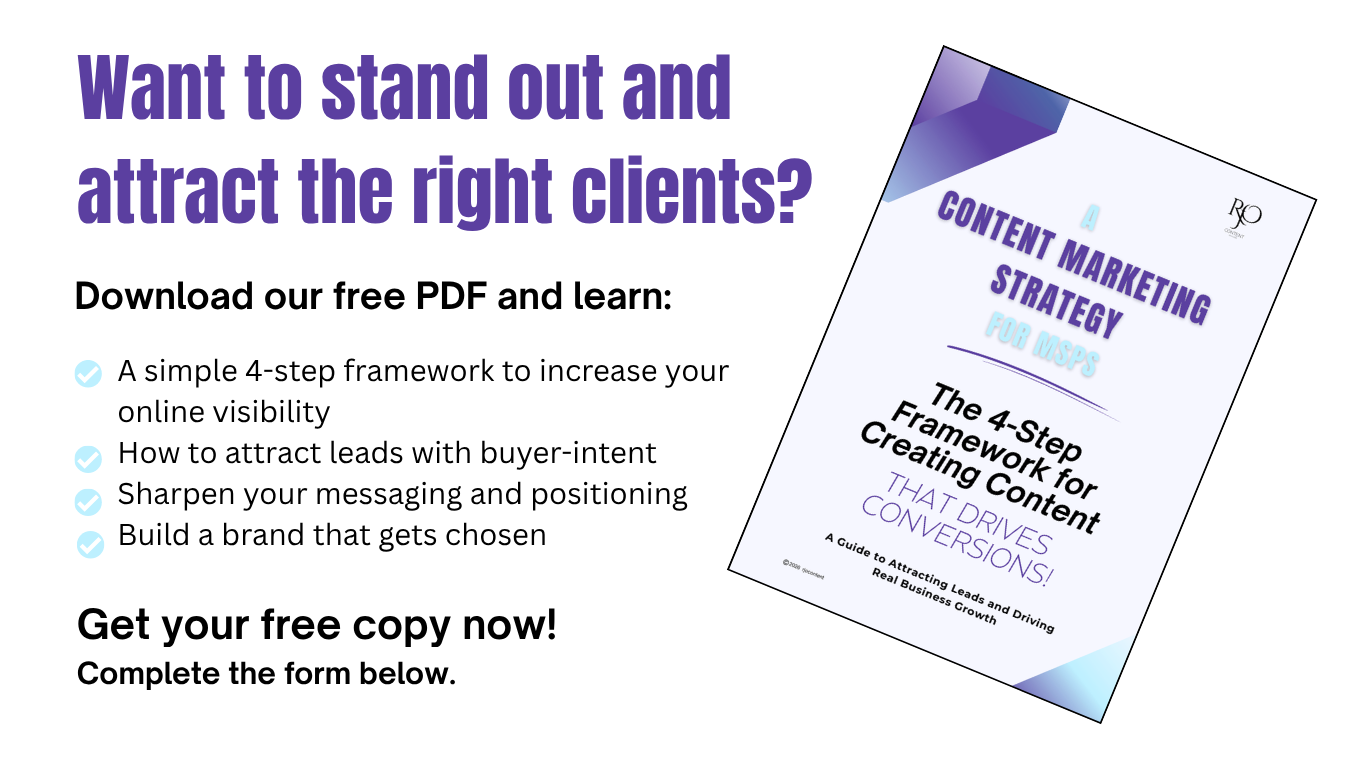
Speaking of which, why not download this free tool: The 4-step Framework for Creating Content that Drives Conversions. It’s a content marketing strategy specifically designed for MSPs.
I created the 4-step framework for MSPs because, whilst I was analysing the social media accounts managed by IT companies, I saw an awful lot of content centred around company updates, generic announcements, and uninspiring messaging.
Sorry, but it’s awful.
If your social media account is not filled with content that engages, informs and inspires, you won’t drive conversions.
Use social media to amplify your content, not talk about yourself.
Remember, your content talks about your PICs and what you can do for them.
That means creating posts that:
Addresses real business problems you’re willing to answer
Offers clear, actionable solutions
Challenges assumptions about what IT support services involve
Informs IT managers and executives of things they should know about
You can do all this by repurposing blog content into:
-
- Short-form insights
-
- Thought leadership posts
-
- Simple breakdowns of complex ideas
Repurposing blog content saves time, money and effort.
You shouldn’t promote every piece of content you write. Social media marketing also involves starting debates, soliciting opinions, ideas and information, or simply putting yourself out there and making an important emotional connection.
Be the person behind your brand personality.
-
- Post images of you brewing the tea before an important meeting about your latest cybersecurity strategy (then explain the outcome of the meeting)
-
- Ask other IT managers if they’ve seen the latest news about GDPR and DUAA?
-
- Publish a survey asking businesses which software or platform they’re using, and repurpose the results for a piece of content
Use social media to be seen and heard. MSPs looking to partner with PICs cannot be a faceless business.

5. Inbound Links: Build Authority That Google Respects
If content is the engine that moves your PICs from A to C, backlinks are the fuel that accelerates visibility.
Search engines use inbound links as a signal of trust.
If credible websites are linking to you, it tells Google:
“This business is worth paying attention to.”
The problem is that backlinks are hard to come by. In the past, it was possible to rank by publishing content on third-party websites.
However, web owners were charging a fee for publishing content on these websites, and they became known as link farms. Guest posting suddenly became a black hat SEO practice and was dishonoured by Google.
The search engine behemoth updated its algorithms, and overnight, businesses lost prominent SERPs and became buried in the rankings.
Buying low-quality links or using outdated tactics can do more harm than good.
Search engine algorithms credit backlinks that are earned through value and thus appear genuine.
The new focus is on building quality backlinks, which is achievable by.
- Publishing guest articles on relevant platforms
- Writing for industry publications (ideally that don’t charge)
- Strategic partnerships
- Digital PR opportunities
The benefits of building external links is they:
- Accelerate how high you rank in search engines
- Increase domain authority
- Improved page ranking across your entire site
- Faster performance of new content
- Scale your reputation, authority and trust
The more credible you are, the more visible you become.

6. Off-Page Content: Expand Your Reach Beyond Your Website
A solid content marketing strategy should include brand awareness.
This means positioning your brand in as many places as possible. For MSPs, this means showing up where IT executives and IT professionals are consuming content.
You will find your audience in multiple places across the internet.
So your content should too.
Distribute content across platforms that expand your reach:
-
- Social platforms (other than social media)
-
- External blogs
-
- Industry websites
-
- Publications executives read
When prospects encounter your insights in multiple places, it establishes you as an authority in your field and creates familiarity.
And familiarity breeds trust. Off-site content helps to
Increase referral traffic
Create brand visibility
Strengthen your positioning across your industry
You’re no longer just another MSP. You’re a recognised voice.
7. Build A Brand Personality: Be The Voice Professionals Listen To
Let’s address how you are perceived online.
Most MSPs sound the same.
Generic.
To be completely honest, a quick tick list would typically look like:
Professional? Yes.
Clear? Sometimes.
Memorable? Not even close.
If your messaging is bland, it blends in.
If your content does not read well, people won’t read it.
Without a brand personality, your business becomes noise nobody wants to hear.
That’s not where you want to be.
You want to be seen, heard and loved.
Oh yes, Bunny, you do!
So focus on building a distinct voice which gives your brand personality.
Remove:
-
- Corporate jargon
-
- Generic phrases and
-
- Overly safe language
Replace it with communication that is:
-
- Direct
-
- Confident
-
- Human
Language that speaks to readers.
Not only do you need to sound like someone your clients trust, they need to like you, Bunny.
So sure, speak about real frustrations and provide answers your PIC needs to know. But provide information by writing sentences that are easy to grasp and enjoyable to read.
This is engagement.
What comes after engagements, Bunny?

How It All Comes Together
As you can see by the above explanations, a content marketing strategy that works does not involves publishing content for the sake of it.
The real impact comes when content works together.
-
- On-page SEO ensures your web pages are recognised by search engines
-
- Blog content drives consistent traffic and accelerates your ranking
-
- Social media amplifies reach, drives traffic and builds trust
-
- Backlinks build authority, credibility and trust
-
- Off-page content expands visibility and increases brand awareness
-
- A brand personality is more engaging and helps to convert prospects
What This Means For Your MSP
When a content marketing strategy is implemented properly, the results are clear:
-
- Increased traffic
-
- Better quality leads
-
- More control over who you work with
-
- Stronger positioning
-
- More conversions
-
- Long-term ROI
-
- Business continuity
Content continues to perform long after it’s first published.
This is growth that builds over time. And so does your business!
Do You Have A Content Marketing Strategy?
If your current content marketing efforts are not delivering results, it’s not because content marketing doesn’t work.
It’s probably because your strategy is not aligned with the mindset of your prospects.
When you build a system around visibility, authority, and trust, everything changes.
Traffic increases. Leads improve. Growth becomes predictable.
A content marketing strategy is good for business.
If you need help with guiding prospects from attention to acquisition, contact me to schedule a free 30-minute discovery.
Alternatively, download the free guide below and access: The 4-step Framework for Creating Content that Drives Conversions.
It’s a content marketing strategy specifically designed for MSPs.
That’s what we do!