
Thought leadership content can elevate your online visibility and position you as the specialist you are.
Except thought leadership content is not so easy write.
It’s give you a headache, right?
The thing is MSP owners have the knowledge and the solutions people need to know about.
And this puts you in the driving seat to be a genuine thought leader.
Perched at the forefront of business technologies, you have the expertise and the experience to identify problems and solutions now and in the future.
It is this type of thought leadership content that can help MSPs stand out in a crowded market.
It’s your red dress, honey.
People see you wearing that red dress.
Let’s get you ready to party.
Do you remember how Neo gets distracted in the Matrix…

Thought Leadership Content Vs. Content Marketing
Thought leadership content differs from standard content marketing.
The key difference is that a strong thought leadership piece:
- reinterprets commonly-held views
- identifies issues people don’t see or choose to ignore
- expose hidden incentives or benefits
- reveal psychological mechanisms
- predict future outcomes and potential consequences
- address opposing views and stake a claim for both or neither
The purpose of thought leadership content is to establish intellectual ownership over a narrative.
For more guidance about how to write thought leadership content, take a look at my earlier article.
In contrast, traditional articles are used for content marketing purposes:
- Inform and educate,
- explain how tools work and the benefits they offer
- provide industry advice (which is often a repeat)
Need a topic to write about for thought leadership content?
Below are a handful of suggestions that should inspire MSP content writers.
5 Examples of Thought Leadership Content You Can Use
Is Microsoft 365 the Right Tool for Every Business — or Just the Default One?
Microsoft 365 has become the unquestioned standard for business productivity, and most MSPs recommend it without hesitation.
But default recommendations aren’t the same as right recommendations.
For certain business sizes, workflows, and budget profiles, alternatives like Google Workspace and Zoho Workspace offer genuine advantages that never get discussed because the channel incentives point firmly in one direction.
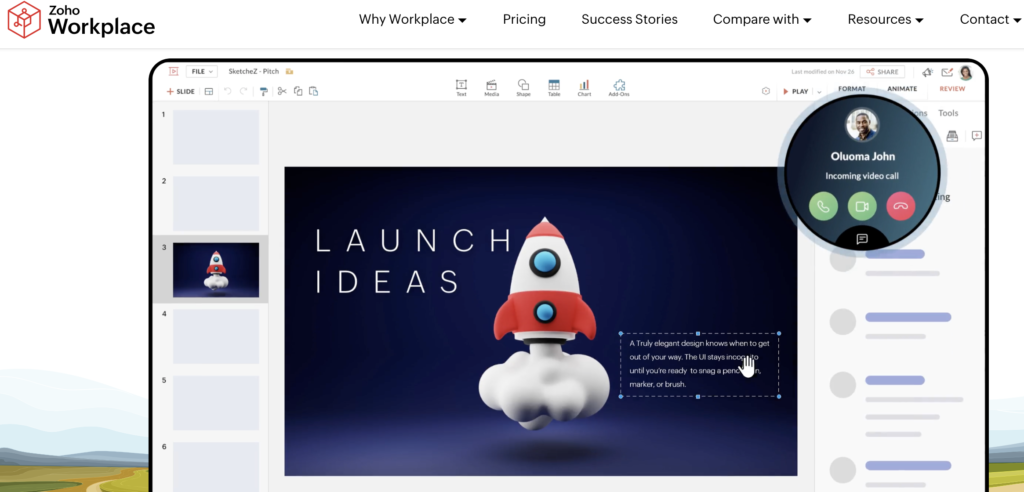
A thought leadership piece that honestly evaluates when Microsoft 365 serves businesses well and when it doesn’t signals something rare in this industry — an MSP that prioritises client outcomes over vendor relationships.
The market appreciates a customer-first approach.
We Learned That Fast Growth Creates Invisible Technical Debt
This is a highly credible topic because it reflects the lived operational experience that fast-growing businesses will have experienced:
- revenue increases
- employee onboarding
- reactive software adoption that creates disconnected workflows
- bypassing governance procedures
- neglecting documentation and
- prioritising speed over long-term architecture
Beneath the surface, IT networks are quietly accumulating invisible technical debt.
Initially, there is very little visible friction.
Systems function with the odd blip, employees adapt to new processes, and leadership assumes the business is scaling successfully.
The problem emerges later — when business growth amplifies hidden weaknesses in the IT infrastructure.
As organisations become more complex, early shortcuts short circuit as:
- fragmented infrastructure
- security vulnerabilities
- inconsistent data
- operational bottlenecks
- rising support costs
- and increasing dependency on tribal knowledge
The result is a business that appears commercially successful but is structurally fragile underneath.
This topic showcases you as a strategic partner, and not simply a standard MSPs putting out fires.
Whilst your competitors are focusing on tools, uptime, and cybersecurity features, your thought leadership content is providing insights about the potential for organisational risk, scaling dynamics, and long-term business resilience.
The Cyber Insurance Small Print That Could Ruin Your Clients
Cyber insurance has become a standard recommendation in the MSP playbook.
And most of it makes sense considering the financial consequences of a data breach.
But few MSPs are having the harder conversation: what happens when a client makes a claim?
Policy exclusions around unpatched systems, unsupported software, and inadequate multi-factor authentication are catching businesses out at precisely the moment they need protection most.
Your clients think they’re covered by insurance.
But they may not be if their cybersecurity stack is deemed inadequate.
That conversation is uncomfortable. But uncomfortable conversations build long-term trust.
Bad Data Creates Organisational Hallucinations
Most businesses think they have a data quality problem. What they actually have is a perception problem — most leadership teams are unwilling to admit the reality.
Low-quality data doesn’t just produce inaccurate reports.
It constructs a fictional version of your business that looks entirely plausible from the inside.
Duplicated CRM records that inflate pipelines.
Outdated reporting that tells last year’s story with this year’s confidence. Disconnected systems produce contradictory numbers that nobody can reconcile
This is the data that leadership teams are making strategic decisions on — an operational fiction that does not exist in reality.
This is organisational hallucination.
The consequence is occasional miscalculation.
Here is a story that could be happening to 99% of your audience, and not one of them will know about it.
But at some point, they will come to suspect it, investigate and know it.
Thought leadership content works best when you change the reader’s perspective and prompt them to take positive action.
The MSP Industry Accidentally Incentivises Mediocrity
This title works because it’s accusatory without being personal.
The word “accidentally” is doing critical work here. It removes blame from individuals while indicting the system itself — which makes the argument harder to dismiss and easier for the reader to engage with honestly.
Business owners who resonate with this piece are the ones already frustrated by it.
And it demonstrates that you are an MSP that breaks the cycle by building a brand, a reputation, and a client relationship model that makes the mediocrity of the wider market visible by contrast.
In a landscape of decision makers with doubts, the value MSPs provide has to be communicated to bring down the barriers of resistance.
Lay out the plain truth about the industry and give people a window to peer through.
This is exactly what thought-leadership content is for.
Want help creating thought leadership content?
I’m not in any doubt that you have plenty of ideas for thought leadership content.
What you may lack is the time it takes to get your thoughts on the page.
Or it may be that you are not so good at articulating your words in writing. Complex ideas can be difficult to communicate, especially thought leadership content that you have barely had conversations about.
Let’s talk. It will do you the world of good to get the monkey off your back.
2 Responses
[…] I’ve got you covered in this article: Thought Leadership Content: Examples for Executives […]
[…] reminds me: I’ve listed some ideas for thought-leadership content in this […]