
MSPs, you’re using Artificial Intelligence (AI) writing tools to create content, aren’t you?
Should you be?
Well, yes…but be careful.
If you’re among the cohort of MSPs — and businesses in general — who were quick to adopt AI writing tools to create content, you probably think you’re onto a money-saving winner.
What you may not be aware of is that AI is damaging your online presence.
Your SEO is suffering.
Your readership is bored.
Your brand image is being damaged.
Allow me to explain.

The AI Content Creation Promise (is a lie)
AI rapidly became a powerful tool in the content creation landscape because you were told it would:
- save you hours by generating content at a fraction of the effort it previously took
- slash your content production costs by reducing your dependence on copywriters, agencies, and freelancers
- help you publish more consistently by generating ideas
- scale your content output overnight — more blogs, more posts, more emails
- optimise your content for SEO, engagement, and conversions
- personalise your messaging at scale
- level the playing field, giving small businesses access to content writing that can compete with huge marketing budgets
- free up your time to focus on strategy and relationships while AI handles the execution
When you hear all these positives, of course, you are going to believe AI writing tools will reshape how you mass-produce content.
What you haven’t been told is that when every business in your market has access to the same tool, mass producing content doesn’t give you a competitive advantage — it produces the same content with the same generic messaging.
While AI-driven writing tools offer clear advantages in generating ideas and speeding up content production, quality suffers.
Let me clarify that point.
You may feel AI content writing tools is an improvement on YOUR writing, but the overall quality of content you are producing is average.
It’s the same as everybody else.
Same voice, same messaging, same bored readers.
I hate to be the bearer of bad news, but unfortunately, we’ve been sold another lie.
AI Writing Tools: Pros & Cons
Let’s not be too hasty and write AI off just yet. There are pros and cons to AI writing tools that are worthy of closer inspection.
Then we’ll make a judgment call.
It is important to understand and proactively address AI limitations before relying on AI content writing tools to produce all your content.
Here are the pros and cons of using AI writing tools to create content.
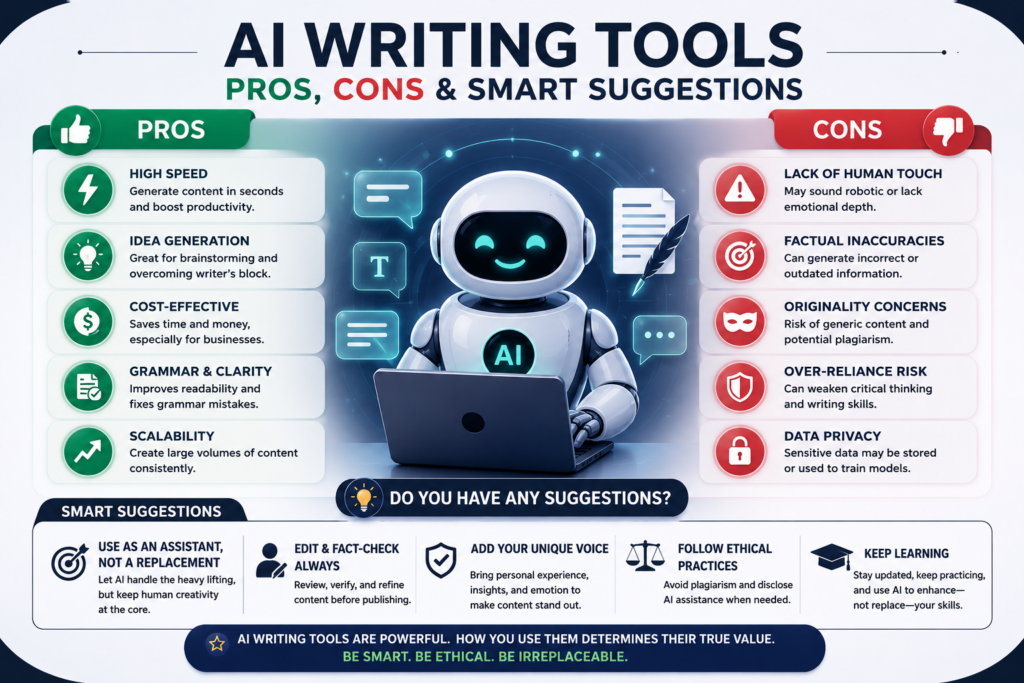
Pro 1: Increase Productivity
One of the most significant benefits of using AI writing tools is efficiency.
AI can generate articles, blog posts, social media captions, and marketing copy in a fraction of the time it would take a human writer.
This is particularly valuable for businesses that need to produce large volumes of content consistently.
Pro 2: Reduces Content Creation Costs
More productivity means a reduction in the cost of creating content.
In some cases, it can replace the need for multiple writers.
However, AI writing tools shouldn’t become your content writer. Use it as a supplement to help your writing.
Pro Tip: I know from experience that you cannot rely on AI to do your writing for you. The ideas are generic, the language is cringeworthy and it needs heavy editing.
Pro 3: Brainstorming
AI’s most powerful advantage is generating content ideas.
This is probably fair. I would even go as far to say that AI will probably beat most humans in generating ideas.
At least you would expect it to, but how can we judge?
I’m not convinced it would produce as many good ideas as a team of humans riffing off one another.
Humans are seeing the reality of experience in real time. AI relies on learning models, which are often a couple of years behind.
AI content writing tools are not even up to date.
Moreover, a team of IT professionals know more about the nuances of your job. And if you have insights and experiences nobody else has written about yet, you can produce original thought leadership content.
If nobody has written about a topic, AI doesn’t know about it.
AI is simply regurgitating what other websites have already published.
Pro Tip: I can tell you from personal experience, it’s not difficult to find where the machine has scraped content from — usually the top-ranking websites in Google.
Not only that, but quite often the rewrite is a simple reshuffling of words.
Yep, you can tell it’s been ripped off. It’s borderline copyright infringement.
And it could be copyright infringement. Not a pro. A con.
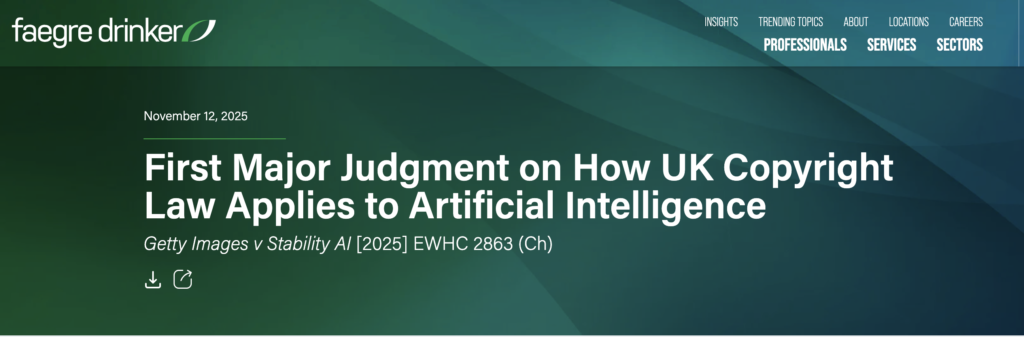
AI companies have plenty of lawsuits brought against them, most of which have been batter away by High court judges.
The ruling is that machines are not bound by copyright laws. Humans are.
To emphasise this, the US government has stepped in to protect the companies modelling AI.
So AI companies are legally allowed to infringe copyright.
Every other business is not.
Think about that.
Google is also penalising websites for duplicate content, which I wrote about in another piece.
Also, think about that.
Pro 4: No Writer’s Block
Another advantage AI content writing tools unerringly have over humans is that they never suffer from the dreaded writer’s block.
How many times have you stared into your screen, brain-dead?
AI is highly effective at overcoming writer’s block. It will suggest topics, present you with outlines, and even structure content logically.
I have to say, AI can bring you into flow.
Pro 5: Eliminates Errors
Do you remember grammar and spelling lessons from school?
A handful of people you speak with might.
The Grammar Nazis.
AI writing assistants are like the grammarian sponge-heads who have remembered that less and fewer don’t necessarily have the same meaning.
In addition to grammar, AI will offer clarity and tone to make content appear more polished and professional.
But it can also make it feel more boring because AI writing tools lack personality.

AI Writing Tools: Summary of Pros
AI writing tools, it has to be said, do have some formidable advantages. Speed of production, endless ideas and organised structure are not to be scoffed at.
Shall we have a look at the cons and weigh them against the pros?
I shall try not to be biased….
…errrrm…
Cons 1: Lack of Originality and Depth
I alluded to this disadvantage in my intro — because it is my biggest bugbear. And one content creators should be most careful about.
AI-generated content lacks originality and depth.
Let’s not forget that AI is only possible because of machine learning, which enables systems to learn from data without explicit programming.
Subsequently, AI typically relies on patterns and existing data.
The result is generic, repetitive and drab content that lacks unique insight or a distinct voice.
For brands trying to differentiate themselves, this can be a major limitation.
There is also the issue of copyright which I mentioned above.
To reiterate, humans, and this your business, could be sued for copyright infringement if you use unedited versions of AI produced content.
Con 2: Off-Skew Accuracy
AI assistants cannot lie — apparently.
But it does admit it’s not always right.
Again, this is something I know from experience by writing about topics I know about — and that time I asked AI how it produces reliable information.
I quizzed AI about how it produces content and whether the content it produces in reliable and trustworthy.
The resounding answer is no. You can see a snippet from the conversation below. Read the full transcript here.
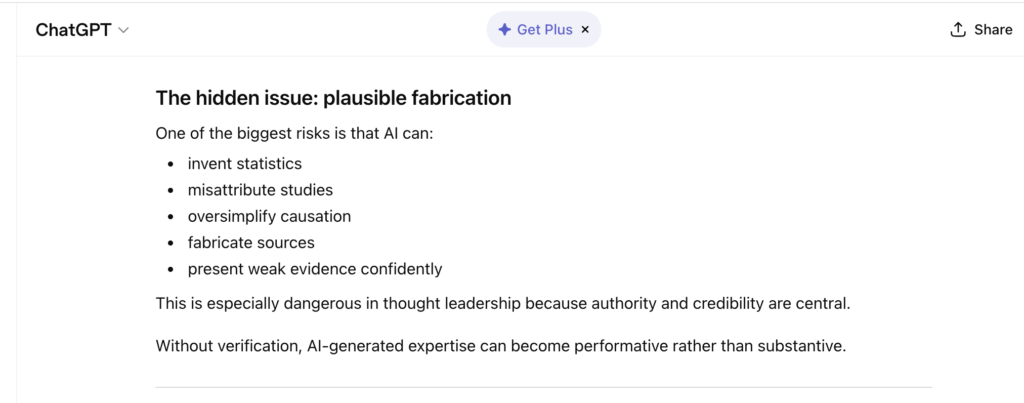
AI does apologise.
Thus, accuracy is a concern.
While AI writing tools can produce content quickly by scraping content published elsewhere, they don’t verify facts.
This means there is a risk of including outdated, misleading, or incorrect information.
When content is based on opinion, particularly in complex or rapidly evolving topics, it could influence your opinion as a writer.
And if you’re also an IT technician, you could be persuaded to perform a task that has repercussions later on.
So imagine if you offer IT advice to your client is misinformed, and they suffer a system crash or cyberattack.
Your credibility and reliability as a brand are damaged.
Con 3: Emotionless
MSPs who develop a brand personality are more likely to grow their audience and convert more visitors.
At the time of writing, AI writing tools struggle with nuance, lack emotion, and are not great when it comes to storytelling.
High-quality content often requires a deep understanding of audience psychology.
Readers are moved when content is relatable, when an emotional spark is triggered.
Human writers continue to outperform machines when it comes to being relatable.
Content that aims to persuade, inspire, or build trust may feel flat or impersonal if generated solely by an AI content writing tool.
Give your content some uumpphh by developing a brand voice.
Con 4: Damaging SEO
AI advocates will tell you that AI writing tools will help your SEO.
And to some extent, that is true.
If you tell your AI assistant the keywords you intend to use and how many times you want to include them, it will do it for you.
But search engines don’t only use keywords to prioritise content.
As a matter of fact, keywords are mostly used to identify topics, categorise the page and match it to search terms.
Keywords don’t carry that much weight in terms of ranking.
Search engines prioritise content that demonstrates expertise, experience, and authenticity.
High-quality content and inbound links that suggest the content is high-quality are two of the most important factors used by Google to rank content.
AI-generated material rarely produces high-quality content. Or at least to my mind. At the risk of sounding arrogant, I do expect a certain standard of quality and AI writing tools fall short every time.
If they’re falling short for me, your AI assistant is not good enough for you either.
Con 5: Potential Copyright Infringement
As I touched on above, AI content writing tools scrape content from other websites and rehash it.
If you choose to copy and paste without edits, you’re essentially using somebody else’s idea but re-jumbled.
Not only does an over-reliance on AI assistants lead to homogenised content across the web, but it may also be infringing copyright laws.
This argument has been ramped up in 2026. Legal debates and lawsuits addressing whether AI models infringe copyright laws are being aired in courts.
Copyright owners have raised the fact that the AI models do infringe on the rules. Text, images, audio and video content are all under scrutiny and will be checked whether it constitutes “fair use” (a very grey and cloudy area) against pre-existing works.
Getty Images has already set its sights on generative AI companies by suing Stability AI et al.
Although the lawsuit failed, it wouldn’t surprise me if larger corporations chase down content creators from small businesses for breach of copyright laws.
And they use fear-mongering tactics to elicit money from businesses.
This is what Getty Images and Corbis (at the time owned by Bill Gates) did regularly as a money-making scam when they deemed an image they had the rights to was subject to “unauthorised use” but available on Google for anyone to download.
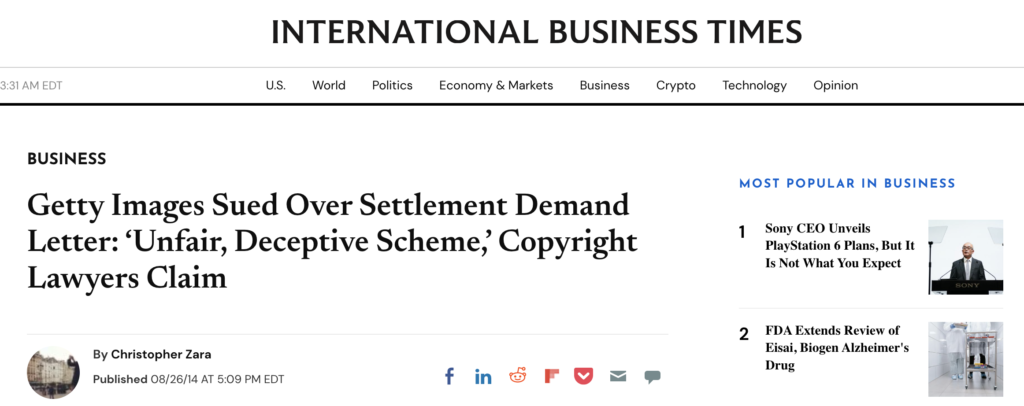
Yet not all their images were accessible and could not be downloaded. They were protected. So why did they not protect all their images?
Getty is still trying it on despite not having any legal grounds to enforce a disputed invoice.
And they might come after you!
Somebody might come after you for copyright infringement. My guess is probably Microsoft!
Should You Use AI Content Writing Tools?
The simple answer is yes, for sure. AI content writing tools have a good number of uses that give content creators an advantage.
If you’re responsible for creating the content for your IT support firm, why wouldn’t you use an AI writing assistant?
Just learn how to use it properly by eliminating the cons mentioned above.
That means being able to write great content.
Developing a brand personality.
And engaging readers with insights, clarity and wit.
Use AI to research ideas. But edit the content significantly.
Ideally, you should rewrite the bulk of it. Because the bulk of what AI writing tools produce in a piece of content is shit (IMO).
If you’re not the most confident or skilled writer, or need help to develop your brand voice, my 18 years as a content writer may be the answer.
Feel free to contact me for a free 30-minute discovery, if I have the bandwidth.
Working with me not only gives you access to a competent writer. I developed an entire content writing strategy that drives high-quality traffic and converts more leads.
Before you get in touch, why not check out my blog for a full in-depth rundown of how I help MSPs to increase qualified leads by over 900%.
No Responses